What is happening: why “Claude is down” suddenly spikes
When an AI service like Claude goes offline, the disruption is not only technical — it is behavioral. Search queries such as “Claude down,” “Claude not working,” or “Is Claude down today?” tend to surge within minutes of a widespread outage.
This type of search pattern is reactive and collective. Users are not looking for tutorials. They are looking for confirmation. The core intent is diagnostic: Is it just me, or is the system down for everyone?
Claude, developed by Anthropic, has become integrated into workflows that range from software development to content creation and research. When it stops responding, the interruption creates immediate uncertainty — especially for users who rely on it professionally.
The spike in search interest reflects three simultaneous anxieties:
-
Productivity disruption
-
Data or session loss concerns
-
Lack of official communication in real time
Why outages in AI tools trigger disproportionate reactions
Claude is not just another app. Like ChatGPT, it is embedded in daily work routines. The more invisible and seamless a tool becomes, the more shocking its absence feels.
AI outages generate stronger behavioral responses than traditional web outages for three reasons:
-
Workflow dependency: Many users draft code, reports, emails, or research directly inside the platform.
-
Cognitive outsourcing: Users rely on AI to think through problems in real time.
-
Expectation of permanence: AI tools are perceived as always available infrastructure.
When access disappears, users move instantly to search engines to validate the failure. This creates a synchronized spike in queries — a pattern typical of reactive search behavior.
Common technical reasons why Claude may be down
While only Anthropic can confirm the exact cause of a specific outage, most AI service interruptions typically fall into one of these categories:
1. Infrastructure overload
Sudden surges in traffic can overwhelm API endpoints or inference clusters, especially after product launches, updates, or media coverage.
2. Cloud provider disruptions
AI models rely heavily on cloud infrastructure providers. If there is an issue at the infrastructure layer, downstream services may be affected.
3. Deployment errors
Updates to models or system architecture can introduce temporary instability.
4. Security mitigation events
Traffic spikes that resemble bot activity can trigger automated protection systems.
5. Scheduled maintenance
Less common during peak hours, but sometimes miscommunicated or unexpected for users.
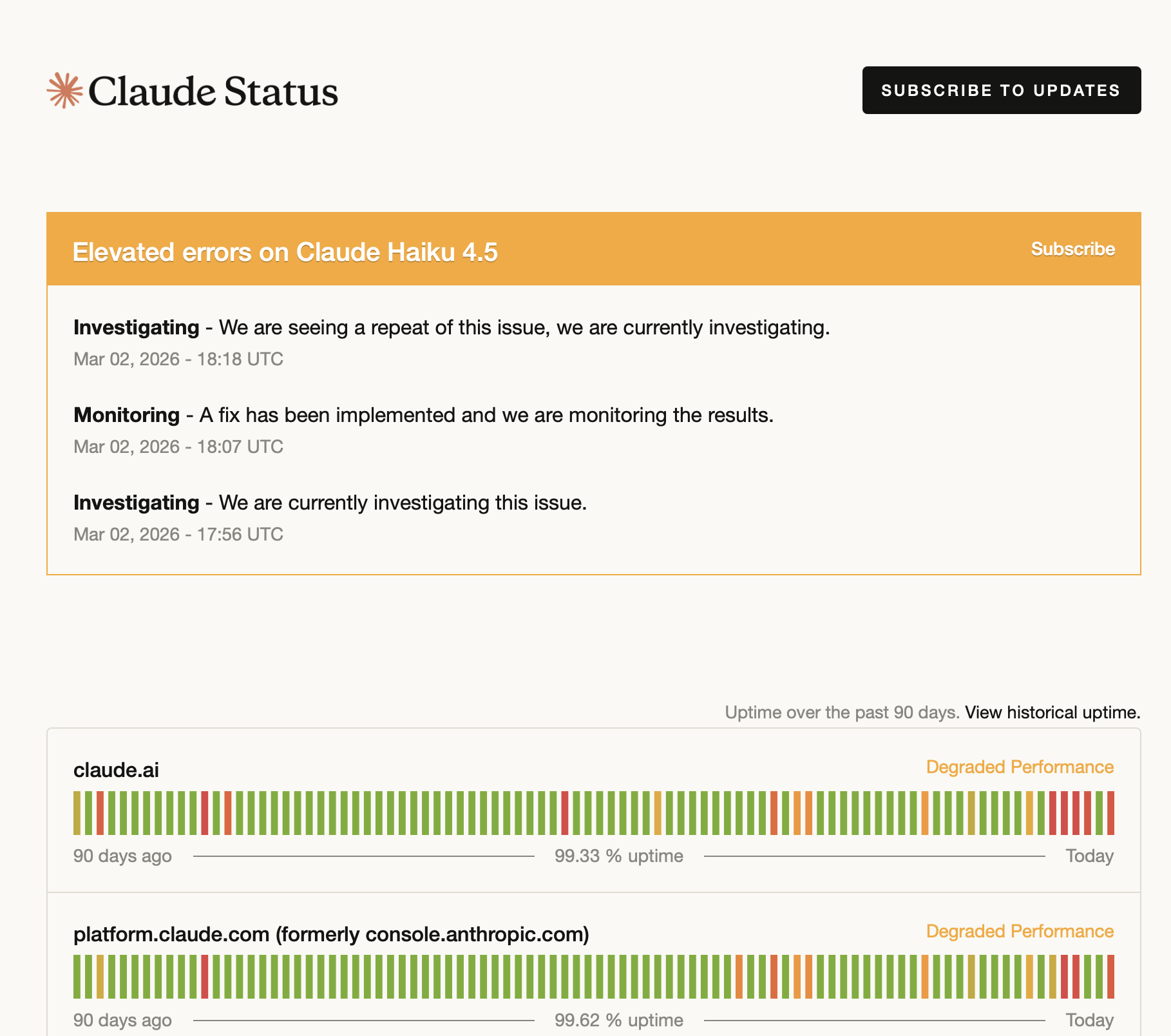
Anthropic typically reports service health via its official status page. When outages last several hours, it usually indicates a deeper infrastructure or scaling issue rather than a brief glitch.
What users are really searching for
Search data during outages usually clusters around four core intents:
-
Confirmation: “Is Claude down?”
-
Duration: “How long will Claude be down?”
-
Alternatives: “Claude alternative AI”
-
Cause: “Why is Claude not working today?”
This reveals a behavioral sequence:
-
Detect malfunction
-
Verify collectively
-
Seek explanation
-
Look for replacement
Outages are moments of comparison. When Claude is unavailable, users often test other AI systems, including ChatGPTor competitors in the generative AI space. Temporary migration can become permanent if trust is affected.
How to check if Claude is actually down
Before assuming a global outage, users can verify:
-
Anthropic’s official status page
-
Developer API status dashboards
-
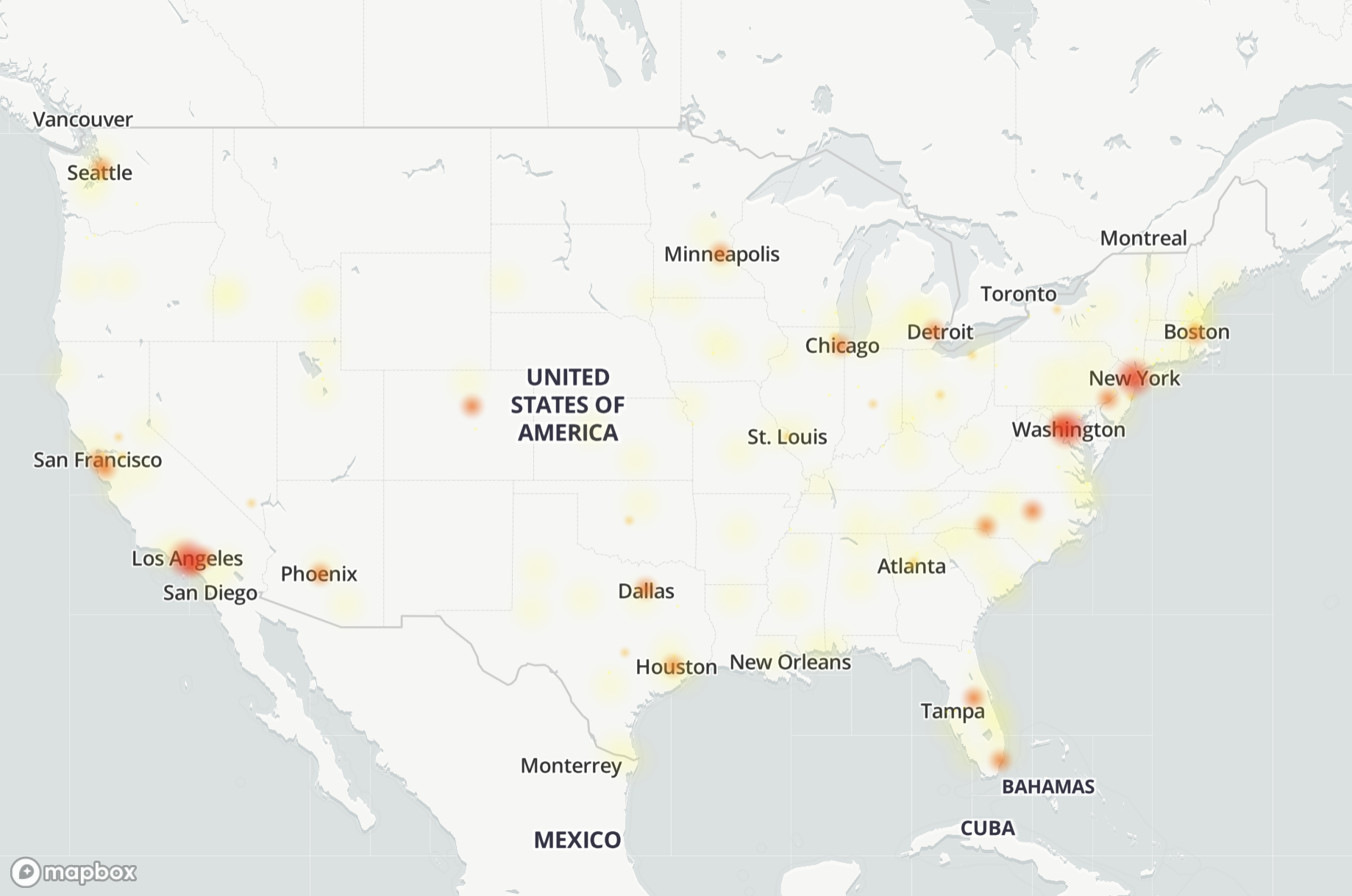
Third-party outage trackers (e.g., Downdetector)
-
Social media updates from Anthropic
If the issue is localized:
-
Clear browser cache
-
Log out and back in
-
Check API keys if using integrations
-
Try another network
However, if search volume is surging globally, the issue is likely systemic rather than individual.
Why these outages matter beyond inconvenience
When a major AI system goes down for an extended period, it highlights a structural shift: AI tools are becoming infrastructure.
Just as email outages once disrupted communication at scale, AI outages now disrupt cognition workflows. The dependency level is increasing faster than redundancy planning.
From an SEO perspective, outage-related queries are typically:
-
High volume
-
Short duration
-
Emotion-driven
-
News-adjacent
They reflect digital dependency in real time.
What this pattern reveals about users
The search spike around “Claude down” is less about technical curiosity and more about collective reassurance.
People are not asking how Claude works.
They are asking whether their productivity pipeline is broken.
Outages expose an emerging behavioral truth: AI systems are no longer experimental tools — they are operational layers in daily work.
And when that layer fails, the first reflex is not to wait.
It is to search.
References / Sources
-
Anthropic Official Status Page: https://status.anthropic.com
-
Anthropic Company Website: https://www.anthropic.com
-
Downdetector: https://downdetector.com