
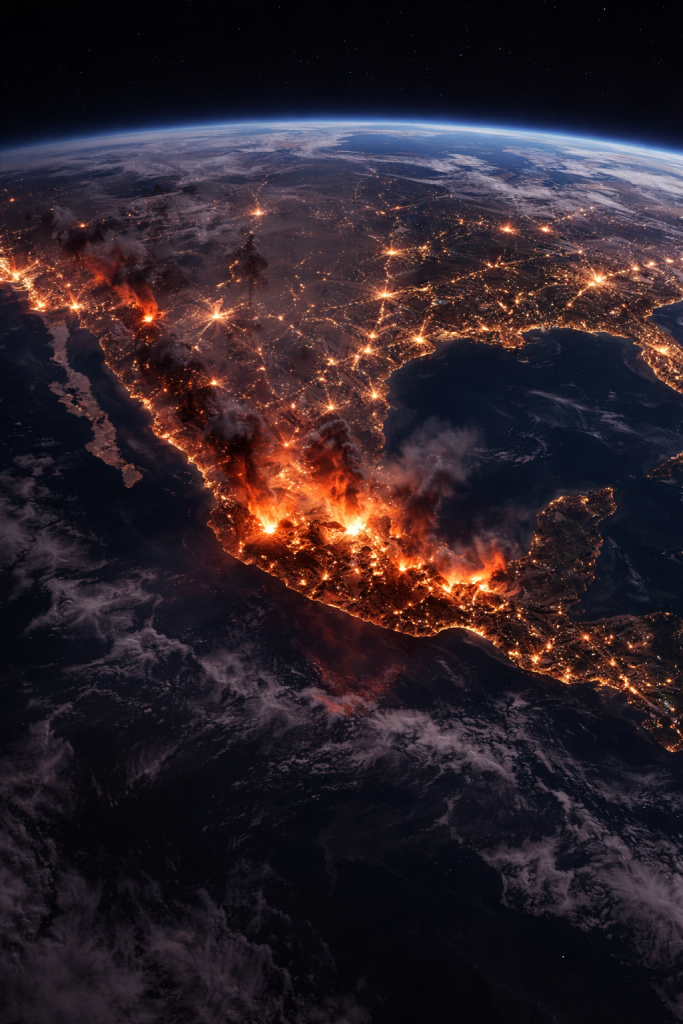
Mexico is experiencing a major security crisis following the official confirmation of the death of Nemesio Oseguera Cervantes, known as “El Mencho,” leader of the Jalisco New Generation Cartel (CJNG).
He was killed during a federal military operation in the state of Jalisco earlier today.
This is one of the most significant blows against organized crime leadership in recent years — and it has triggered immediate consequences.
Immediate Aftermath: Coordinated Violence
Following confirmation of his death, suspected CJNG cells launched coordinated acts of violence across multiple states.
These include:
-
Road blockades using burning vehicles
-
Armed confrontations
-
Attacks on infrastructure
-
Disruption of highways and major routes
These tactics, known in Mexico as “narcobloqueos,” are designed to:
-
Slow security forces
-
Demonstrate operational strength
-
Create public pressure and fear
-
Show territorial control
States Reporting Incidents
As of now, violence and blockades have been reported in:
-
Jalisco
-
Michoacán
-
Guanajuato
-
Colima
-
Tamaulipas
-
Nayarit
-
Aguascalientes
-
Baja California
Jalisco remains the epicenter.
Why This Is So Serious
The death of a cartel leader does not immediately dismantle the organization.
Instead, it can trigger:
-
Retaliatory violence
-
Internal power struggles
-
Regional instability
-
Attempts to assert dominance
If critical infrastructure — such as airports — becomes involved, the crisis escalates significantly, signaling a direct challenge to state authority.
What Happens Next?
The next 24–72 hours are critical.
Key factors to watch:
-
Whether violence spreads further
-
Whether the cartel leadership transition is orderly or fragmented
-
The scale of federal military response
-
Official government communication
This is not just a security event — it is a structural moment that could reshape Mexico’s criminal landscape.