

Before the guide, the context: this search didn’t appear by accident
Search data shows that how to prepare for a marathon doesn’t trend like breaking news.
It rises slowly, consistently, and predictably.
That pattern tells us something important:
people are not reacting to a headline — they are reacting to a calendar.
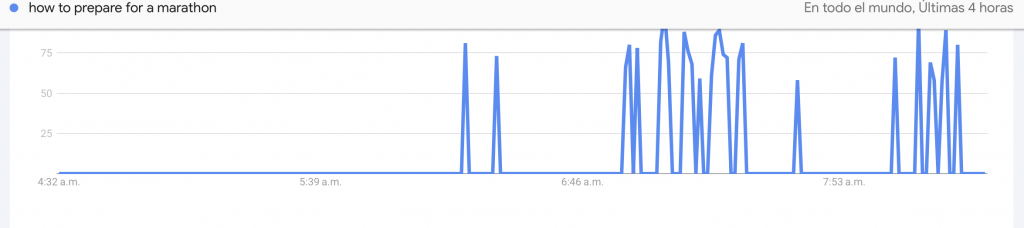
What the data shows (and why it matters)
📈 Temporal evolution: preparation anxiety over time
The Google Trends timeline reveals:
-
No single viral spike
-
A gradual increase sustained over weeks
-
Repeated peaks that align with training cycles
This is classic anticipatory search behavior.
Runners don’t ask this question once.
They ask it when:
-
mileage increases
-
fatigue appears
-
race day stops feeling abstract
In other words: the search grows when commitment becomes real.
🌍 Geographic distribution: where the concern concentrates
Geographic data shows strongest interest in:
-
🇺🇸 United States
-
🇨🇦 Canada
-
Other regions with strong amateur running cultures
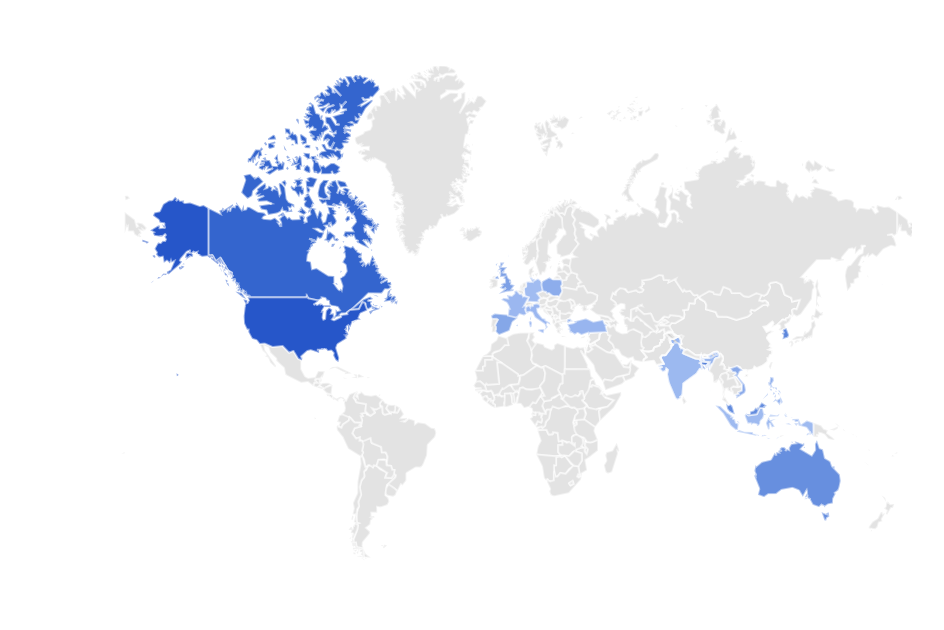
What’s notable is that interest also appears in places without major local marathons, suggesting:
-
travel to international races
-
remote training for global events
This supports the idea that the search is driven by participants, not spectators.
What’s really driving the surge
Major races like the
New York City Marathon,
Boston Marathon, and
London Marathon
require runners to prepare 12–16 weeks in advance.
Search interest typically rises when runners enter the most psychologically unstable phase:
too invested to quit, not confident enough to relax.
This is not about ambition.
It’s about fear of underpreparation.
So what are people actually looking for?
Despite the simplicity of the query, intent clusters into four clear needs:
-
Structure – “Am I training the right way?”
-
Injury prevention – “Is this pain normal or dangerous?”
-
Fuel and recovery – “What should I eat, and when?”
-
Race-day survival – “How do I not blow up halfway through?”
That’s why it makes sense to include the “satellite” topics inside one coherent guide.
The Practical Guide: How to Prepare for a Marathon (What Runners Really Need)
1. Training: consistency beats hero workouts
Most marathon failures don’t come from lack of effort, but from uneven effort.
What works:
-
3–5 runs per week
-
One long run that gradually increases
-
Easy runs that stay genuinely easy
What doesn’t:
-
sudden mileage jumps
-
racing every training run
-
ignoring recovery days
Preparation is cumulative, not dramatic.
2. Injury prevention: the silent deal-breaker
Search data spikes often coincide with the moment runners feel pain.
Key principles:
-
Pain that changes your stride is a warning
-
Rest days are part of training, not a failure
-
Strength and mobility reduce risk more than mileage
Most runners don’t fail on race day.
They fail three weeks earlier and don’t notice.
3. Nutrition and recovery: fuel the process, not just the race
Marathon preparation isn’t about one carb-loading dinner.
It’s about:
-
eating enough during heavy weeks
-
practicing race-day fueling in training
-
prioritizing sleep during peak mileage
Many “walls” are nutritional, not mental.
4. The taper: where doubt peaks
The final weeks often feel wrong:
-
you run less
-
your legs feel heavy
-
anxiety increases
This is normal.
The taper isn’t losing fitness — it’s revealing it.
5. Race day: execution over emotion
By race day, preparation is done.
The biggest mistakes come from:
-
starting too fast
-
copying other runners’ pace
-
improvising nutrition
The goal isn’t to feel amazing early.
It’s to still be running at the end.
Final takeaway
The surge in searches for how to prepare for a marathon isn’t random.
It signals a predictable moment when:
-
commitment meets uncertainty
-
preparation becomes urgent
-
confidence hasn’t caught up yet
Understanding that context matters, because preparation isn’t just physical.
It’s psychological.
And that’s exactly when people turn to search.
References
-
Hal Higdon Marathon Training Plans – Training schedules and guidance for runners of all levels (Novice to Advanced).
https://www.halhigdon.com/training/marathon-training/ -
Nike Marathon Training Plan – A comprehensive 18-week marathon training program with strength, speed, and recovery guidance from Nike Run Club.
https://www.nike.com/running/marathon-training-plan -
REI: Training for Your First Marathon – Expert tips on training buildup, mileage recommendations, and race-day preparation basics.
https://www.rei.com/learn/expert-advice/training-for-your-first-marathon.html